

Arup K. Chatterjee (PhD) is Professor of English, at the OP Jindal Global University. He began his career as a freelance journalist at The Telegraph, India. In 2014, he was a recipient of the Charles Wallace fellowship, to United Kingdom. He was awarded his degree of Doctor of Philosophy at the Centre for English Studies, Jawaharlal Nehru University, in 2014-15, for his doctoral dissertation titled Hillmaking: Architecture and Literature from the Doon Valley. Between 2011 and 2018, Arup was the Chief Editor of Coldnoon: International Journal of Travel Writing& Travelling Cultures, which he founded in September 2011.
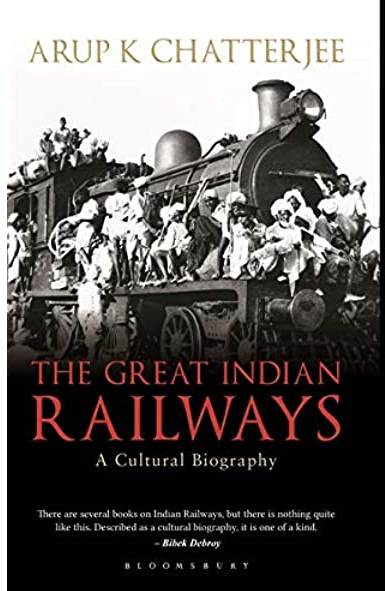
In 2012, Arup translated the Urdu poems of Firaq Gorakhpuri, published in the biography written by Ajai Man Singh, The Poet of Pain and Ecstasy (Roli 2015). He is also the author of the widely reviewed and acclaimed books, The Purveyors of Destiny: A Cultural Biography of the Indian Railways (Bloomsbury, 2017; revised and updated as what is now a bestseller, The Great Indian Railways, 2018) and Indians in London: From the Birth of the East India Company to Independent India (2021); Adam’s Bridge: Sacrality, Performance, and Heritage of an Oceanic Marvel (Routledge 2024), and Ram Setu: The Memoirs of an Enchanted Bridge (Rupa 2025). Between 2015 and 2019, he helped write the history of Deloitte India. In 2017-18, Arup was a visiting fellow at Brunel University London. In 2022-23, he was a Research Associate/Visiting Scholar at the School of Oriental and African Studies, University of London. From January to July 2024, he was a Visiting Professor at the University of Faroe Islands (Torshavn, Kingdom of Denmark).

In addition to his teaching and research, Arup has contributed numerous articles on history, literature, culture, and politics, to The Hindu, The Indian Express, The Telegraph, The Indian Express, The Times of India, Hindustan Times, The Conversation, Scroll, The Wire, DailyO and Huffington Post, The Caravan, Moneycontrol, and many others, apart from contributing to Coldnoon, and authoring over thirty peer-reviewed academic papers in globally renowned journals. He has been interviewed at All India Radio, Writers in Conversation, SBS Radio Australia, The Quint, BBC India, India Today, Aaj Tak, among other media networks, besides being the author of over seventy articles and academic papers in national and international publications.
In 2022-23, Arup was a key consultant (‘critical friend’) with Horniman’s Museum, London, where he provided intellectual and scholarly support to the organization’s tea exhibition, in the light of Arup’s own research on tea history and his theoretical concept, ‘gastromythology’ (which he introduced and defined in the realm of food studies, consumption studies, and literary theory, in 2020). Arup’s scholarly interests lie in the history of British imperialism, politics, and philosophy; Victorian studies and British cultural encounters with India; colonial and postcolonial historiography of India; Vedanta and nondualism; Indian philosophy and Jungian psychoanalysis. Arup practices calligraphy as a pastime. His family and he attempt to engage in supporting animal rights and the wellbeing of urban animals.

Academic Papers







Something went wrong. Please refresh the page and/or try again.
Articles & Reviews in Mainstream Press








Something went wrong. Please refresh the page and/or try again.
Poetry and Translations





Something went wrong. Please refresh the page and/or try again.
The Calcutta Encyclopedia
The Purveyors of Destiny: A Cultural Biography of the Indian Railways and The Great Indian Railways



Something went wrong. Please refresh the page and/or try again.
In this fascinating cultural history, Arup K Chatterjee charts the extraordinary journey of the Indian Railways, from the laying of the very first sleeper to the first post-Independence bogey. It evokes our collective accumulation of those innumerable memories of platform chai and rail-gaadi stories, bringing alive through myriad voices and tales the biography of one of India’s defining public institutions (Shashi Tharoor, Author, M.P., Lok Sabha)
The Purveyors of Destiny is a fascinating and well-researched cultural biography of the Indian Railways-those intricate arteries of the soul of India, as have been experienced, written, filmed, and dreamed. We cannot all travel by rail to know India, as Gandhiji did, but we can and should read this book! (Tabish Khair, Author, Professor)
Drawing on an impressive repertoire of literature and film, this elegantly crafted biography of the railways takes us on a riveting journey through the cultural history of the Indian nation, from the 1850s to the present. Written with wit and verve, it is a delight to read (Sugata Bose, Author, Professor, M.P., Lok Sabha)
There are several books on Indian Railways, but there is nothing quite like this. Described as a cultural biography, it is one of a kind (Bibek Debroy, Author, Chief of Economic Advisory Council to the Prime Minister of India)
A deeply engaging work that comfortably straddles, and masters, the worlds of academic research and modern nonfiction, offering countless delightful gems of India’s railway legends and narratives for the curious reader. Crafted with great skill and a keen understanding of modern culture from the region and beyond…a remarkable achievement! (Kaushik Barua, Author)
…a wonderfully eclectic account of the Indian Railways and the vital place they occupy in our cultural history, with memorable moments and motifs from literature, cinema and other elements of our collective imagination. A great train journey, replete with all of the essentials from garam chai and A.H. Wheeler to historic arrivals and departures … (Stephen Alter, Author)
This is a rare and unique perspective on the cultural history of an organization as perceived by writers, critics, films, colonial rulers and local citizenry from the 1840s till today… The most powerful chapter is the one on Partition, where the Railways become the ‘Dumb Waiters’ and purveyors of destiny of two nations. The horrors of Partition generated a large number of books, short stories and films, reminding us of the bestiality and violence on a scale rarely seen in history, while the national leadership looked on helplessly. Here, the author draws from Khushwant Singh’s Train to Pakistan, Krishan Chander’s Peshawar Express, a story where the train itself is the narrator of events that took place on it, Bhisham Sahni’s Amritsar Aa Gaya, Sadat Hasan Manto’s Kasri Nafisi and many more…Arup K. Chatterjee vividly captures the debates about its impact and on its changing cultural influence over time…Chatterjee is a professor of English; his command over language and facility with it, apart from his unique perspective on the railways, makes this exceptional book compulsive reading (Vinoo Mathur, in Outlook).
Arup K. Chatterjee in his The Purveyors of Destiny: A Cultural Biography of the Indian Railways traces the 156-year-history of the Indian Railways from an unusual angle—how the railways influenced the cultural milieu of India through not only literature, films and songs, but also catalyzed revolutionary changes in the country’s political and social canvas. It was the beginning of a new India after the first passenger train ran in Bombay on August 15, 1853. Railways are yet to reach all nooks and corners of India. The changes therefore are continuing (The Hindu).
For the author, the railways is not just an actually existing entity, but is, rather, a myth of tremendously Indian proportions, invoked and evoked in all forms of the national and popular imagination…This book attempts not just to create a new genre, but to set down new tracks for thought, method and writing in the area of culture studies…The perspective Chatterjee brings to this subject is a new and courageous one: rather than drafting a catalogue of novels, films, diaries and journals that have the railways as their theme, which would be expected in such a work, he investigates how the railways themselves affect the form and content of their own representations…The greatest achievement of this book is that it gathers and collects the myths, narratives and histories of the Indian Railways from sources as disparate as colonial archives and popular movies. Chatterjee successfully conjures up the magic in a lucid style, while maintaining the gravity and solemn tone reminiscent of a train journey (Scroll).
Chatterjee’s courage in undertaking such a vast endeavour is laudable…the book is thoroughly enjoyable, even if it is just for its rich trivia (The Telegraph).
Chatterjee moves with ease, from literature to history to politics to cinema, in a juxtaposition of exciting styles and frames of reference, and in a language which he calls symbolic of the railways themselves: “Why should not the language of a railway book pay homage to the institution, the times and eras in which its changing narratives belong?”… From the first proposals for the Indian Railways, to Dwarkanath Tagore and Rowland Macdonald Stephenson’s economic alliances over building them, the Great War of Independence to the age of Kipling, from the Civil Disobedience to the to Quit India Movement, to the reconstruction of the Pamban Bridge and the burst of Eastman colour on celluloid screens in the 1960s, the Indian Railways emerge as a palpable protagonist in Chatterjee’s work (Sunday Guardian).
Chatterjee really hits his stride as he chronicles half a century over intense cultural presence of railways from the stories and films of Satyajit Ray, to a whole yard of Bollywood films, and the novellas of Ruskin Bond. There is hard to find any cultural manifestation he has left out…it is a repository of rare treasures about our lives’ intersections with railways down the years—which will survive phasing of steam engines and meter gauge lines (IANS).
Lord Meghnad Desai: ‘Gandhiji said if he was not in India fighting for independence, he would live in London. Indians in London explains why and how London became a second home for Indians (including Pakistanis and Bangladeshis). Arup K. Chatterjee has unearthed a treasure trove and found London peopled with scores of Indians over five centuries. This is the most comprehensive account of Indians in London I have read and you will enjoy it too.’
Michael H. Fisher: ‘Chatterjee’s fascinating book, Indians in London: From the Birth of the East India Company to Independent India, flows eruditely and creatively among literary and historical sources to highlight Indians in London over five centuries, as portrayed by themselves and by Britons. A scintillating book … that draws attention to the centuries-long relations between India and Britain, accomplished not by the much written about by much written-about Britons but rather by diverse Indians of all classes. [It] shows how Indians actually lived in [London] and were not necessarily always acted upon, but had their own agency, their own attitudes, and their own actions. The book extends Indian history to Britain, greatly adding to works that provincialize Europe
Gopalkrishna Gandhi: ‘Indians in London is a fascinating book, written with immediacy. There is a breathlessness to it … that is very infectious. It is written with speed and is read with speed; an extraordinary experience to read it in sync with the speed in which it is written … It’s been written with immediacy, but without a voyeuristic intimacy. [Arup-babu] has tried to unravel stories, without sensationalizing them, with sympathy and respect for [his characters] even when he is lethally critical of them …There is no slant in it. It has the royalty, the subalterns, the rich, and absolutely down-and-outers … It has Indians in all their varieties, all their contradictions, all their contrasts, conflicted as they are … but Indians [nevertheless] …’
Paul Flather: ‘Indians in London is a remarkable achievement of 500 pages, packed with gems, remarkable memories wonderful vignettes, terrific anecdotes, drawn so widely, both historically and in terms of themes … [that] become a brook, a stream and a veritable tributary … It is a very timely book, given the prominence of Indians in British society today, heading companies, social life, politics and [administration] … the book [facilitates our journey] towards a Global Britain. [Indians in London] adds texture to the colonial relationship between Britain and India, adds texture to it by unravelling the complexity of its various strands, particularly through intimate descriptions of individuals that lie below.’
Albeena Shakil: ‘Indians in London displaces the commonsense that the story of London and India is only one of colonialism, taking it to precolonial times; a time when the gaze was not dominated by colonial hierarchies but was more of a peer-level gaze … A fascinating [menagerie] of Indian immigrations and settlements in London, with a much more equitable position on the erstwhile colonial relations, rather than looking upwards or downwards, rather than looking Westwards or Eastwards …’
Shashi Tharoor: ‘Indians in London is a delightful work that covers a vast amount of ground in its 500 pages, full of detailed research, which wears its erudition … [nonetheless] amazingly readable …’
John Butler for The Asian Review of Books: ‘Indians in London is a rare book which may be described unequivocally as an absolute and utter delight. This is one of them. Arup Chatterjee’s Indians in London is an erudite, well-researched and comprehensive survey of a fascinating subject—four hundred years of Indian residency in London, beginning in 1600 … suffice it to say here that readers become immersed in the teeming cast of thousands in this play, which reads is more like a Hollywood epic (with lots of extras) than a Shakespeare play with a few characters!’
Chinamaya Lal for Berfrois: ‘Indians in London is a magisterial account of the encounter between the megapolis of London and the Indians who travelled there between the sixteenth and mid-twentieth century. Through two hundred odd ‘characters’ or historical protagonists, it tells the story of the way Indians built the city and simultaneously shaped the course of the anticolonial movement in their own country … Each of the chapters in the book – whose headings follow the five-act structure of a Shakespearean play and whose segments are called “scenes” – reveal the various facets of this transformation in the way Indian travellers and the city of London interacted with each other over five centuries … Notwithstanding the wealth of historical detail that constitutes the narrative of Indians in London, it is also important to underline the significance
“Adam’s Bridge: Sacrality, Performance, and Heritage of an Oceanic Marvel is a fascinating contribution to study of space and spatial infrastructure as it braids environmental concerns, and sacred belief with discursive insights into the Anthropocene. It is the outcome of serious archival research and interpretive analysis” (Lakshmi Subramanian, Distinguished Scholar and Author; Historian and Professor, Department of Humanities and Social Sciences, BITS Pilani, Goa; formerly, Professor at the Centre for Studies in Social Sciences, Calcutta)
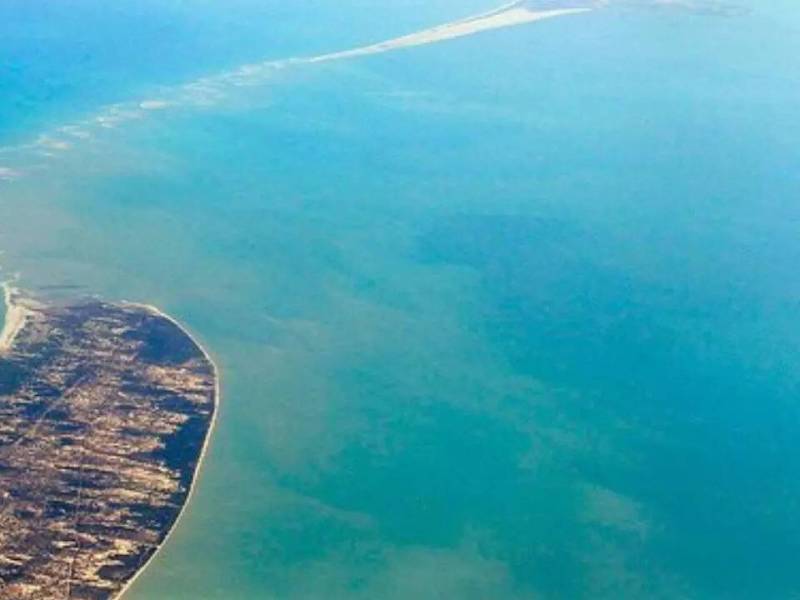
“In Adam’s Bridge, Arup K. Chatterjee tells a captivating story of a unique feature, spellbinding in its geology and symbolism—a sacred space; the work of Gods; an oft-neglected link that connects Tamil Nadu/India and Sri Lanka. For Hindus, it is a land bridge built by a monkey army so that God Rama could rescue his beloved Sita from the demon-king Ravana, in the kingdom of Lanka. For geographers, it is a unique terraqueous ecosystem with 103 tiny reefs and sandbanks, with islets appearing at low tide. For Muslims, it is the causeway that allowed Adam, the first Man, to leave the Garden of Eden (Lanka) and proceed to the Asian mainland. For historians, it was an unbroken causeway until breached by a fierce tropical storm in 1480; and the site of thriving port city of Dhanushkodi, until it was abandoned after yet another devastating storm that killed some 1,800 people in 1964. For Indian and Sri Lankan nationalists, it is the site of tension, as one suspicious side accuses the other of dubious motives for interest and investment. For the thousands of species who live there, it is home. An ocean marvel indeed, and more besides. With this book, Chatterjee walks us through the multiple representations of this unique formation, perched graciously yet perilously betwixt two countries, land and sea, sacral and temporal, calm and tumult” (Godfrey Baldacchino, Distinguished Scholar and Author; Professor of Sociology, University of Malta; Founding Editor, Island Studies Journal)
“Arup K. Chatterjee’s Adam’s Bridge provides a scholarly socio-cultural insight into an enchanting geological feature called the Adam’s Bridge, a linear coralline ridge separating a shallow sea between Pamban Island on the southeast coast of India and Mannar Island on the northern coast of Sri Lanka. A part of the Hindu mythological lore celebrated as the mythical Rama’s bridge, it became a hot topic of discussion both among environmental scientists and among religious enthusiasts, ever since the government mooted the idea of dredging a navigable route through the limestone shoals of Ram Setu. This book takes us through a complex web of ethnography, historiography, and ecological equity concerning this oceanic structure. In this most profound and eloquently written work I have read on Adam’s Bridge (Ram Setu), the author enables us to think about ways of heritagization of this marvel of nature by fostering cross-cultural collaborative efforts. Indeed, a fascinating book and a must-read!” (C.P. Rajendran, Distinguished Scholar and Author; Professor, Indian Institute of Science, Bangalore; and National Geoscience Awardee)
“Considering the evolving geopolitics of southern South Asia, bridging the sea between India and Sri Lanka may perhaps soon get on policy radar screens. By delving into history, historiography, geology, ecology, politics, economics, mythology, and more, in Adam’s Bridge, Arup K. Chatterjee provides a fascinating background to the physical structures and legend-based structuration of Adam’s Bridge that may very well shape South Asian futures in this century” (Nikhilesh Dholakia, Distinguished Scholar and Author; Professor Emeritus, International Business, University of Rhode Island)
“In Adam’s Bridge, Arup K. Chatterjee has made a landmark contribution to South Asia’s coastal histories. Meticulously researched, this book is an epic, interrogative excavation of India’s Adam’s Bridge. Enchanting and exhaustive, it is a provocative inquiry into the intertwining legacies of colonialism, decoloniality, and island geologies” (May Joseph, Distinguished Scholar and Author; Professor of Social Science and Cultural Studies, Pratt Institute, New York; Founder, Harmattan Theater, New York)
“Adam’s Bridge: Sacrality, Performance and Heritage of an Oceanic Marvel is a fascinating study of the historiography of the eponymous structure (also known as Ram Setu), touching upon several entangled threads on myth, literature, colonial narrative, and contemporary politics. It empowers an understanding of how the idea of Adam’s Bridge/Ram Setu became infused with power over the minds of people. This dispassionate analysis reveals that much of the current controversy related to it is public theatre – a cognitive category the distinguished American anthropologist Clifford Geertz saw as a useful lens in interpreting the history and evolution of religious landscapes” (Subhash Kak, Distinguished Scholar and Author; Regents Professor of Computer Science, Oklahoma State University-Stillwater; Member of the Indian Prime Minister’s Science, Technology and Innovation Advisory Council).
“Melting the boundaries between the sacral traditions of Ram Setu and geoscientific knowledge about Adam’s Bridge, Arup K. Chatterjee offers a fascinating account of the tombolo stretching from India to Sri Lanka. The story of origins, politics, diplomacy, ecology, and the troubling concerns of the Anthropocene, is pertinent to the current debates about dredging the area. What are the risks and gains to the people and the planet? How do ancient beliefs interface with modern commerce? Impressive scholarship and cultural sensitivity make Adam’s Bridge highly significant and wonderfully engaging” (Malashri Lal, Distinguished scholar; Professor and Former Head, Department of English, and Dean of Colleges, University of Delhi; Convener, English Advisory Board, Sahitya Akademi).
“Arup K. Chatterjee’s latest book, Adam’s Bridge: Sacrality, Performance, and Heritage of an Oceanic Marvel (Routledge UK, 2024) is unique, as is the subject of this formidably complex and multilayered volume … a fine book-length revelation of Adam’s Bridge or Ram Setu as a magnificent and enchanting ‘tombolo’ whether seen from soteriological or geological perspectives! … Chatterjee recounts an intriguing saga, previously very little known, plausibly told through discourses traversing history, geology, mythology, legends, political, cultural, and geostrategic mores, in a most delightful way. Adam’s Bridge will inevitably stimulate further thought and pronouncements by those fascinated by the world’s natural and anthropogenic geography, its civilization, and its amazing place in our collective minds. I recommend this book to both academic and non-academic readers most enthusiastically!” (Richard Cathcart, Distinguished scholar, geographer, and Founding Director and Head of the Department, Geographos, Burbank, California, USA. Appeared in The Australia Today)
“Adam’s Bridge is a superb addition to the emerging discipline of oceanic and island studies. It presents an engrossing academic analysis of the social, economic, and cultural heritage surrounding the structure in the Gulf of Manner to pick apart a region’s multifaceted historiography” (The Telegraph, India)
 Arup K. Chatterjee